How To Choose A Suitable Mango Pulp Processing Line For Your Fruit Factory
How To Choose A Suitable Mango Pulp Processing Line For Your Fruit Factory
For fruit processing workshops, beverage factories and food ingredient suppliers, turning fresh mango into stable‑quality pulp or puree brings good business income. Many new buyers feel confused when selecting mango processing equipment. They may buy mismatched machines and face low pulp yield or poor finished texture. This practical guide explains the full production flow, key units and selection tips for global fruit manufacturers.
Basic Workflow of Mango Pulp Production
A standard mango pulp processing line follows this simple continuous flow: Fresh mangoes → Washing → Manual sorting → Pulp extraction & peel‑pit separation → Fine grinding → Mixing → Vacuum degassing → Sterilization → Filling
Every step plays an important role. Some steps are optional, you can add or remove them based on your target product and budget.

Core Equipment Breakdown
1. Washing and Sorting Section
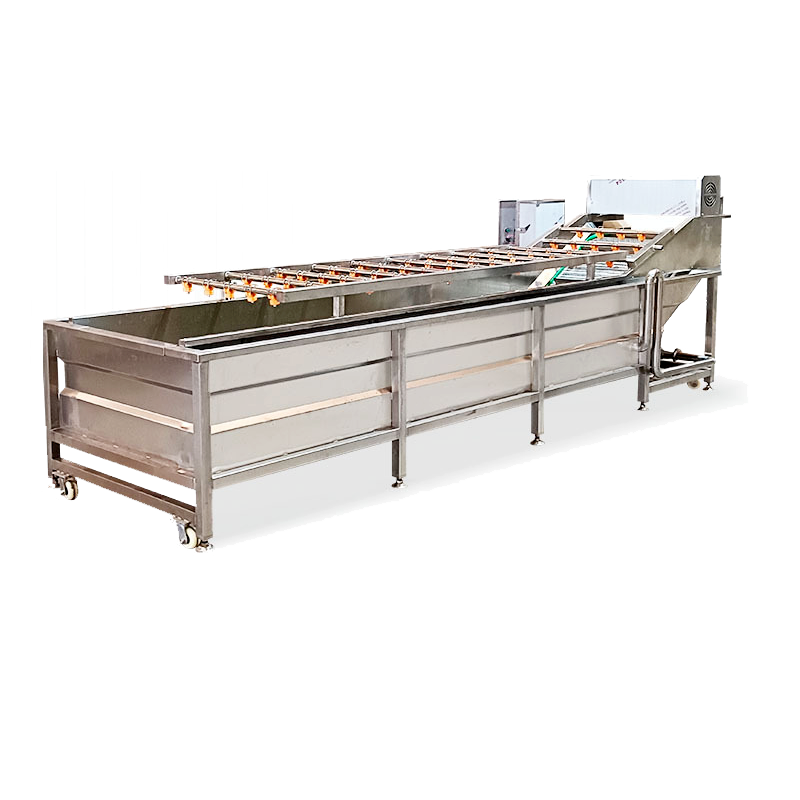
Fresh mangoes carry dirt and surface soil. Two washing options are available: bubble washing machine and brush washing machine. Bubble washing uses water and air bubbles to clean most surface dirt. Brush washing works better for mangoes with heavy stuck dirt. After washing, workers on the sorting belt pick out rotten, damaged or unripe mangoes to protect final pulp quality. You can remove extra washing units if your raw mango is already clean.
2. Mango Pulper (The Heart of The Whole Line)
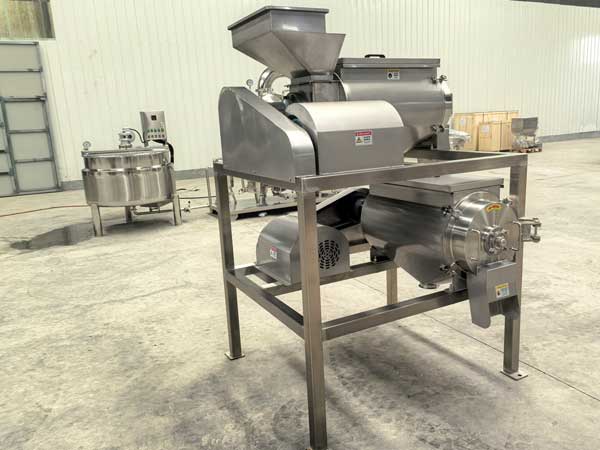
The mango pulper is the most important machine inside the line. It finishes pulp extracting, peel separating and pit removing in one single step. You can change screen parts to adjust pulp thickness. Our pulper models run from 1 ton per hour to 3 tons per hour. The pulper can be bought separately or integrated into the full processing line. It saves extra peeling and destoning machines for your plant.
3. Optional Refining & Mixing Units
If you want extra smooth and fine mango puree, you can add a colloid mill or homogenizer for fine grinding. Mixing tanks are optional too. Use them when you need to blend mango pulp with sugar, water or other additives. For 100% pure mango pulp without extra ingredients, you can skip this mixing step.
4. Vacuum Degassing and Sterilization
Vacuum degasser removes air trapped inside mango pulp. Less air means less oxidation, fewer bubbles and better product stability before sterilization. Then the sterilization tank heats the pulp properly. Heat treatment cuts harmful microbes and extends shelf life of mango pulp, which is very important for export‑ready food ingredients.
5. Final Filling Section
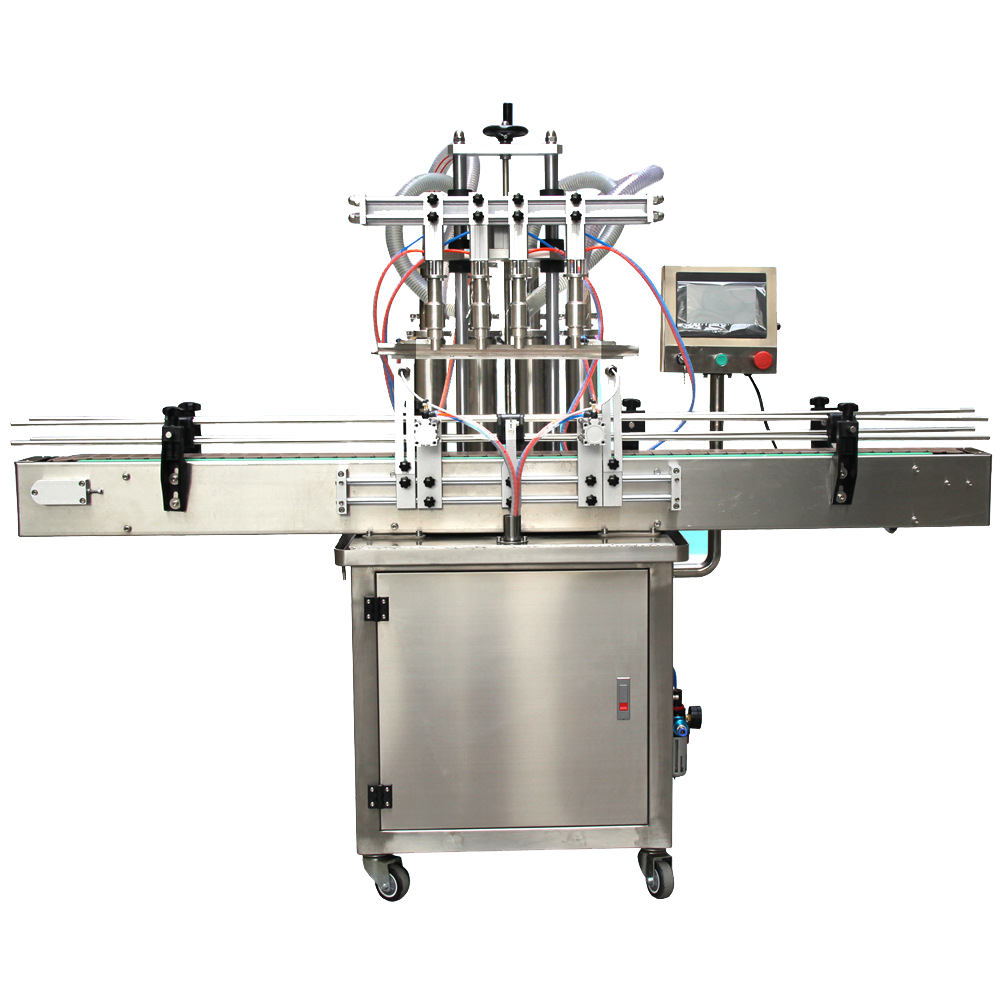
At the last stage, finished mango pulp can be filled into aseptic bags, glass jars or storage pouches for storage and sale.
How To Configure Your Mango Pulp Processing Line
Small‑batch production
If you run a small fruit workshop with limited budget, you can start with core units: washing machine + mango pulper + sterilizer + filling device. Skip fine grinding or mixing if you do not need super‑smooth puree.
Medium‑scale stable production (1‑3 tons per hour)
Choose the complete modular line. Keep all standard sections, add colloid mill and vacuum degasser. This setup makes high‑grade mango pulp and puree for beverage and dessert manufacturers.
Important Checks Before You Order
- Food‑grade SUS304 stainless steel All parts touching mango fruit and pulp must use stainless‑steel material. It resists fruit acid corrosion and meets international food safety rules. All our mango processing machines follow this standard.
- Modular flexible design Add or remove washing, grinding, mixing modules freely according to raw fruit condition, factory space and product requirements. You do not have to pay for functions you will never use.
- Share your real project details for custom solution Before sending inquiry, prepare these key information for machinery suppliers: ‑ Fresh mango input capacity (tons per hour) ‑ Mango variety, fruit size and ripeness ‑ Your final product: pure pulp, fine puree or other form ‑ Available factory space size
Common Application Scenarios
This mango pulp processing line serves many types of global business users:
‑ Fruit processing workshops
‑ Beverage and jam manufacturing factories
‑ Dessert and dairy ingredient suppliers
‑ Tropical fruit agricultural cooperatives
Final Buying Suggestion
You do not always need to buy the fullest configuration at the beginning. Start with core machines matching your present output, and add optional modules later as your mango pulp business grows. Clear your raw fruit situation and finished‑product demand first, and you will avoid over‑buying oversized equipment.
FAQ Section
Q1: Can the mango pulper work alone without buying the whole line?
A: Yes. Our mango pulper can be supplied as a standalone machine for small‑volume fruit processing.
Q2: Do I have to add fine grinding and mixing tanks?
A: No. These are optional parts. You only need them if you want ultra‑smooth puree or plan to add sugar and other ingredients into pulp.
Q3: What final products can this line produce?
A: It mainly makes mango pulp and mango puree, widely used for drinks, jams, ice‑cream and dessert raw materials.
Q4: Is stainless‑steel equipment easy to clean?
A: Yes. Stainless‑steel contact surfaces are easy to rinse, helping you avoid cross‑contamination between different fruit batches.
Q5: Can you adjust machine capacity for different factories?
A: Our mango pulp processing line supports customized capacity from 1‑3 tons per hour for fresh mango input. We also provide layout drawings and overseas technical support.
Related Blogs