Did You Pick The Right Meat Processing Equipment For Your Production?

June 26, 2026

Did You Pick The Right Meat Processing Equipment For Your Production?

Published: June 26, 2026 | Category: Meat processing equipment | Reading Time: 3 Min
Practical buying guide for slaughterhouses, meat factories and central kitchens. Learn how to match meat processing machines with your output, products and food hygiene standards.

For slaughterhouses, meat product factories and large central kitchens, meat processing machines decide your daily output, product consistency and food safety. Many factory owners waste money on mismatched equipment that slows down production. This guide shares neutral, practical tips to help you select matched meat processing machinery.

1. Match Machine Sets Based On Your Business Scale

Different production sizes need completely different equipment combinations.

1.1  Small butcher shops & small central kitchens Daily processing volume is low. Basic machines are enough: small bone saw, table-top meat grinder and manual sausage stuffer. These devices take little space and cost less.
Commercial bone saw machine frozen meat cutting machineCommercial desktop meat grinderCommercial sausage stuffer Sausage filling machineCommercial frozen meat slicing machine
1.2 Medium meat processing factories & mid-size slaughterhouses Stable daily batch production needs semi-automatic equipment. Hydraulic sausage stuffers, medium meat dicers and heavy-duty meat grinders become necessary. Continuous running performance helps cut labor time.
Industrial heavy-duty meat grinderMeat slicer Meat roll machineIndustrial sausage filling machine Sausage stuffing machineMeat Chopper Machine
1.3. Large slaughterhouses & industrial meat plants Full automatic combined lines are required. High-speed bone cutting machines, large meat mixers and multi-function cutting equipment support non-stop mass production.
Meat processing production line

2. Confirm Machine Types According To Your Main Meat Products

Your core finished meat products directly decide which machines you need to prepare.
2.1 Raw meat cutting (ribs, frozen meat, bone-in meat): Bone saw machine, meat dicer, fresh meat slicer
2.2 Minced meat, burger patties: Commercial meat grinder, meat mixing machine
2.3 Sausage, hot dog production: Hydraulic sausage stuffer with different capacity options
2.4 Batch marinated meat: Meat tumbler and seasoning mixing devices
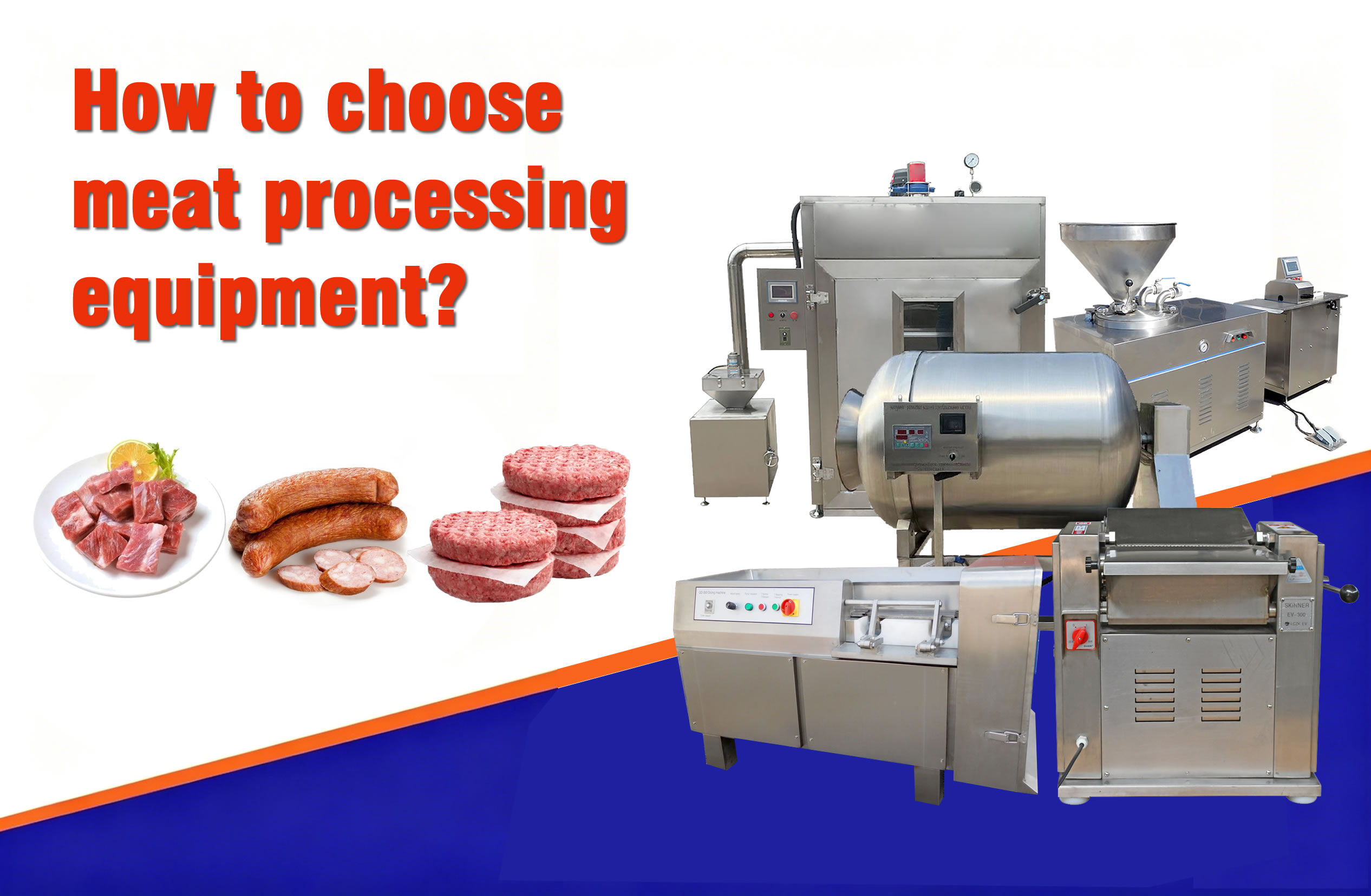
Meat vacuum tumbling mixer Meat vacuum marinatorSausage smoking oven Sausage smoker Automatic Smoke House for Meat Fish Sausage

3. Prioritize Food-Grade Stainless Steel For Hygiene Rules

All parts touching raw meat must follow global food safety standards. SUS304 stainless steel is the standard material for commercial meat machines. It resists corrosion from meat blood, grease and marinades. Most key parts can be fully detached for complete cleaning, avoiding cross-contamination between different meat batches.

4. Compare Semi-Automatic VS Manual Meat Equipment

Many new factory managers struggle between manual and semi-automatic machines.

  • Manual meat machines: Low upfront cost, only fit tiny daily processing. Staff need heavy physical work, and finished meat size is uneven.
  • Semi-automatic meat processing equipment: Higher initial investment, but one worker can finish large batch work. Cutting, grinding and filling results stay uniform every time, lowering long-term labor expense.
Most overseas slaughterhouses and central kitchens choose semi-automatic machines for stable long-term production
Meat slicing machine  Meat cutting machine

5. Check Key Practical Functions Before Purchase

Several easy-to-overlook features affect daily operation efficiency:

  • Safety protection: Overload auto-stop and safety covers to avoid staff injury
  • Easy maintenance: Detachable blades, hoppers and nozzles for fast daily cleaning
  • Voltage customization: Adjustable 220V/380V to fit different countries’ power supply
  • Stable continuous running: Low noise motors without frequent breakdowns

6. Typical Application Scenarios For Full Meat Processing Equipment

This complete set of butcher machinery serves multiple industry clients:

Slaughterhouses for raw bone and meat segmentation
Meat processing factories for sausage, minced meat, frozen meat cube production
Large central kitchens supplying chain restaurants
Wholesale butcher workshops and meat retail processing centers

Final Summary

Sort out three key data before contacting machinery suppliers: daily processing capacity, main meat product types and workshop space. Clear production demands help you avoid overbuying oversized machines or buying underpowered small equipment.

FAQ Section
Q1: Can I buy single meat machines instead of a full production line?
A: Yes. All our meat processing equipment is sold separately. You can start with bone saw and meat grinder first, then add sausage stuffers or dicers later as your business expands.
Q2: Is SUS304 stainless steel necessary for meat machines?
A: Yes. Non-stainless steel will rust quickly with meat grease and blood. Our machines use food-grade stainless steel to pass overseas food safety audits.
Q3: Can you adjust machine voltage for different countries?
A: Sure. We customize 110V/220V/240V single phase or 380V three-phase motors to match local factory power standards.
Q4: Are the cutting blades easy to replace and clean?
A: All blade assemblies are detachable without special tools. You can take them apart and rinse fully after each working day.